Untouched and Unseen
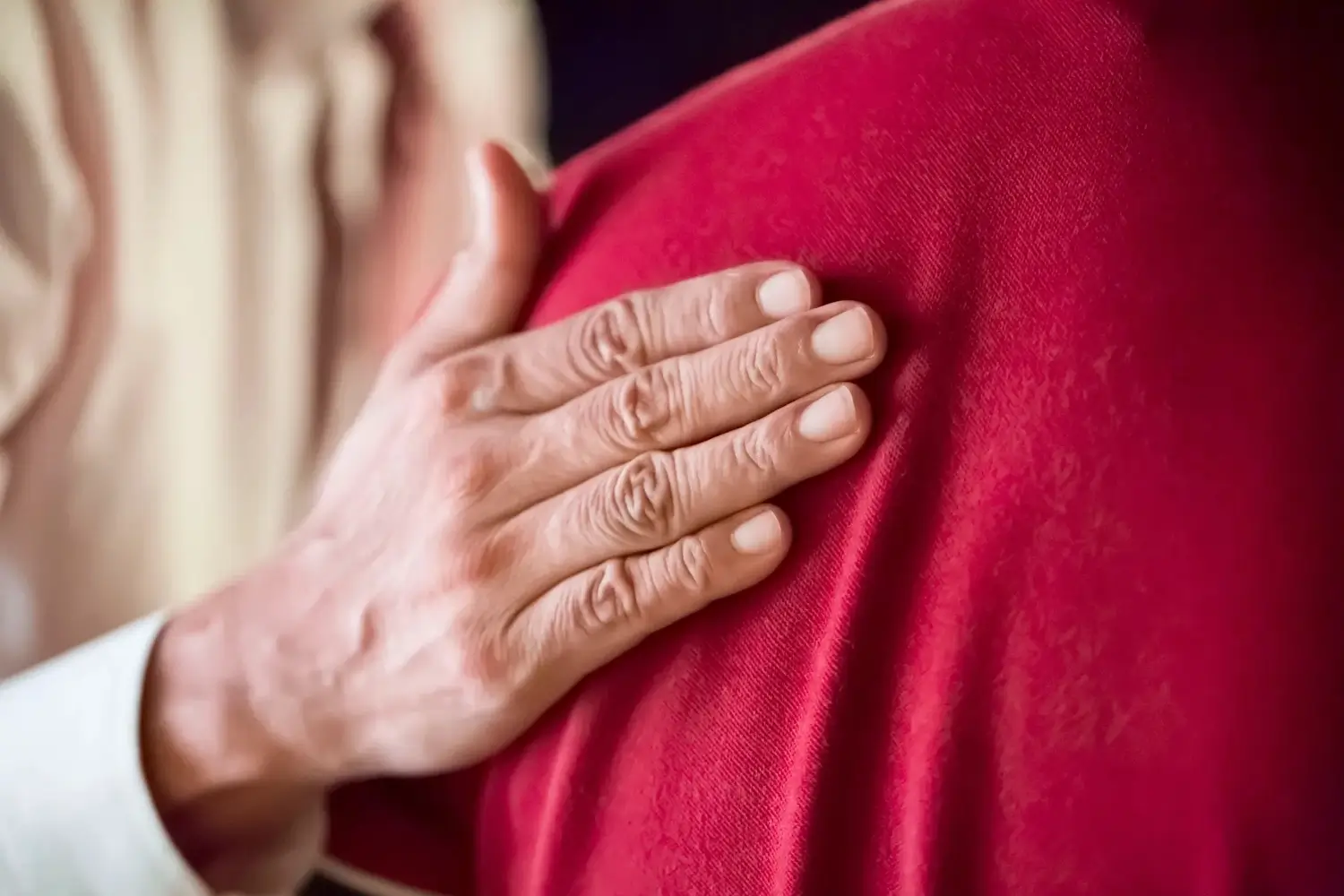
Human skin is not merely a covering; it is our primary interface with the world. It is a sensory organ that constantly processes signals: the warmth of the sun, the texture of clothing, but above all, the reassuring pressure of another human being. When that fundamental form of connection is withheld, year after year, reality begins to fray. You do not simply remain physically untouched; you begin to slowly vanish from the world’s sight. For me, this is not a theory—it is the persistent background noise of my existence. It feels as though I live in a vacuum where my voice is raised, but never finds an echo. My heartbeat exists, but it is felt by no one else.
The Roots of Wealth
In August of last year, a few days before my birthday, I visited the National Archives in The Hague to view the file of my paternal grandfather. I had conducted genealogical research over 15 years ago and discovered the existence of this file, but I had postponed opening it for years, fearing that it would shatter the image I held of him. He meant the world to me during my childhood; I was often “dumped” at my grandparents’ house on weekends. When I officially chose my names following my gender transition, I chose “Roelfien”—my grandmother’s first name—as a tribute.
Viewing my grandfather’s file was profoundly confronting. My grandfather, grandmother, and my father’s eldest sister had been members of the NSB (the Dutch Nazi party) during the Second World War. The documents I read left a permanent scar. In the back of the file were statements from neighbors. Those statements kept the image I had always held of my grandfather intact.
One person wrote: “He was a poor man, but he loved his wife and children unconditionally. He hoped that by joining the NSB, he could give them a better life.” Tears flowed as I read. My grandfather sought wealth, but he never realized that he already possessed the greatest fortune of all: the unconditional love he held for his family.
The Flight: Officially Missing
A few days after my visit to the National Archives, I suffered a massive relapse. I no longer felt safe. In the night of August 21 to 22, I packed some clothing, basic toiletries, and enough provisions to survive the first few days. My inner turmoil was suffocating. Despite having no funds for travel, I made the decision to cancel two months of rent payments and just leave.
On my birthday, I got into my car at 7 AM and drove. I remained away from home until October 5. I traveled through Belgium, France, Northern Spain, Luxembourg, Germany, Austria, and the Czech Republic. I mostly slept in my car, occasionally showering at truck stops or booking cheap B&B stays via Airbnb. During this time, I was officially reported missing, though the registration was only active within the Netherlands.
I drove a total of 15,000 km in a desperate search for a place that felt safe. In the end, I reached a painful conclusion: my existence as a trans woman, compounded by my isolation, ensures that I feel safe nowhere. Being a trans woman creates a palpable distance everywhere I go—a distance that is as clear to others as it is to me.
After returning to the Netherlands, I was pulled off the highway by the police within 20 minutes. After a tense conversation at a carpool parking lot, I was permitted to leave. The officer offered me advice, which I will not share here out of respect for his privacy. I arrived home in the middle of the night after ten weeks away. I felt certain someone had been inside the apartment, yet everything remained exactly as I had left it.
The Biology of Neglect
For the past two years, since the contact with that one woman ended, I have been sinking deeper into the void. My contact with the outside world has been reduced to practically zero over the last year. If you no longer feel safe anywhere—not even in your own home—you find no peace. It is worth noting the irony: I live in a senior apartment complex named after Anne Frank.
Beyond touch deprivation, I suffer from numerous physical ailments. I have a heart rhythm disorder (currently under control) and a pre-stage of skin cancer on my face, crown, and shoulders. In late December 2024, a lesion was surgically removed. After being “clear” for three months, it returned in March 2025. Last year, I underwent several treatments, including a month and a half of chemotherapy cream. Now, I am left waiting once again.
For years, I have taken Tramadol almost daily to manage chronic physical pain. Because of my thrombosis, I am prohibited from taking ibuprofen or aspirin. It is the only thing that allows my nerves to relax. In recent weeks, I have been taking 4 to 8 pills a day. Shortly after my bowel surgery last July, an orthopedic surgeon told me I required surgery on both feet due to trapped nerves. Again, the same wall: no surgery without accompaniment. Moreover, I would be unable to walk for weeks, meaning I would have no way to get groceries. For now, I have had a temporary injection in my right foot.
Additionally, I have thrombosis. Within 48 hours of my first COVID-19 vaccination, I developed thrombosis in my left lower leg and muscae volitantes in both eyes. My left eye sustained permanent damage. Four years ago, seven polyps were removed from my intestines. For two years, I suffered from blood in my stool, which was repeatedly dismissed with, “You are a trans woman, it must be the hormones.” After visiting a GP during a short holiday, I was immediately sent to the hospital. I was severely anemic, and my B12 levels were unmeasurable.
The referral to the gastroenterology center followed. In the first week of October 2021, I underwent a colonoscopy under anesthesia. I awoke to be told I had seven polyps, all of them suspicious. Four weeks later, I was operated on.
The surgeon revealed that my former GP had written in the referral that I was “very angry” because I kept insisting the symptoms weren’t hormonal. The surgeon told me that, next time, I should get even angrier, because I had been referred two years too late. All the tissue was on the verge of malignancy. Since then, I have been under permanent medical control.
The Humiliation of "Nobody"
Three years later, just weeks after my partner of 23 years ended our relationship, I had to undergo another examination under anesthesia. My ex-partner refused to accompany me, forcing me to postpone. For a year and a half, I searched for anyone who could drive me to and from the hospital. I found nobody.
Last year, I bought something online from someone living a street away. I started talking to her, and she looked at me and said: “I will go with you. Get the pre-examinations scheduled, and I will be there.”
I underwent the procedure at the end of July. When I woke up, I was told I had 11 polyps this time. The surgeon told me not to go longer than three years between exams. He knows my situation and mentioned that, as an exception, they might admit me for the night next time if I truly have no one else. I felt so small, especially when they asked whom to call in an emergency. I cannot describe the feeling of having to say: “Nobody.”
An Upside-Down World
A week after returning home, I found a police envelope in my mailbox—a report filed on my birthday. I live in a flat with an internal gallery; someone had accessed my home via the neighbor’s balcony. A few days later, I discovered a new lock on my storage unit. I have been to the police station countless times, but they insist they didn’t replace it. I don’t believe them; they were the only ones who knew I was away.
Last week, I was kicked out of the police station. The receptionist told me they had no time and that if I didn’t feel safe, I should just move. Since I received the keys to this apartment, I have dealt with vandalism, discrimination, and exclusion. It is an upside-down world. I am expected to yield to people who believe I do not belong here. It is painful that I cannot expect even basic support from the police—a right laid out in our constitution.
After returning home, I read that a new GP had established a practice in town. Given the years-long waiting lists, I signed up immediately. The first two meetings went well, but it is now clear that this GP also has no intention of helping me. In an email, he stated that he could do nothing for me. He knows that I have long held the desire to end my life prematurely.
My desire to live has completely vanished. When I told him I would end my life myself, he stated that, due to protocols, he was obliged to come over accompanied by the police. When I asked if he could offer then any actual help, I received no answer.
The End of the Road
In recent weeks, I have written my farewell letter, filled out my wishes booklet at Dela, and created my own funeral card. I am currently looking for means to end my life. The day I have the means in my possession will be the day I end my life myself.
Surviving in the Void
Since returning home, I have left the house only for essential groceries. I have zero contact with the outside world. The days are a struggle. Tramadol helps take the edge off, but life is becoming unbearable. I find less and less motivation to wash, shower, or clean. I smoke, and for the first time in 30 years, I am smoking inside the house. Even the walk to the balcony feels like too much.
Since August of last year, I have lived in total withdrawal. Society and the healthcare system look right through me. When a provider uses my “complexity” as an excuse to maintain distance, that physical distance becomes a wall.
Untouched and unseen is not just a state; it is a slow erasure. I possess the wealth my grandfather had—the capacity for unconditional love—but in a world that refuses to see me, that love remains unrequited. I write this in the hope that my voice finds an echo before the silence becomes final.
Conclusion
My journey has become a testament to the devastating impact of social and medical invisibility. When you are systematically ignored, denied safety in your own home, and left to navigate the complexities of life and death without a single hand to hold, the soul inevitably begins to retreat.
I have shared this not to seek pity, but to expose the reality of a system that fails those it is meant to serve. My story is a plea for the recognition that, regardless of one’s history or labels, every human being deserves to be seen, touched, and held. Before the silence claims the last of my energy, I hope these words serve as a mirror to a society that has lost the ability to care.