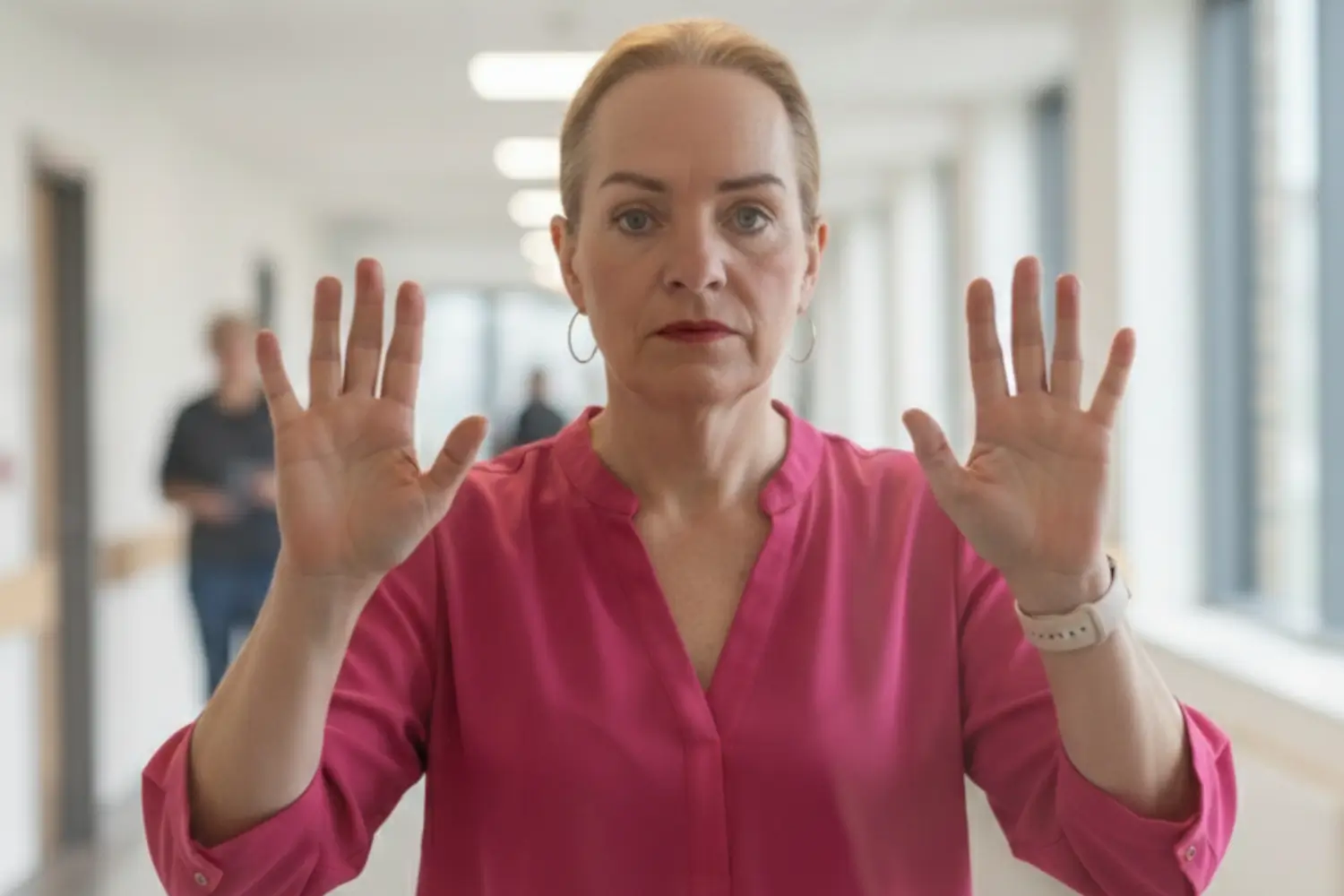
Invisible Wall of Healthcare
We live in an era of unprecedented medical advancement, yet we are witnessing a catastrophic decline in basic human empathy within our care systems. For many, a visit to a doctor is a step toward recovery; for others, it is an encounter with a cold, structural barrier. This is the Invisible Wall of Healthcare, a phenomenon where the human being is systematically replaced by a set of symptoms, a gender label, or a “risk profile” that justifies professional distance rather than engagement.
For Nadine van Schoondrager, this wall is not a metaphor. It is the literal experience of reaching out for a hand and finding only a clipboard. When the healthcare system functions as a gatekeeper rather than a provider, it creates a vacuum of care that is particularly lethal for those already suffering from lifelong touch deprivation.
The Taxonomy of Rejection: "Too Complex to Care"
In the architecture of modern medicine, efficiency is king. This has led to a dangerous “taxonomy of rejection.” When a patient like Nadine enters the system—carrying the weight of sixty years of isolation and the profound shift of a late-in-life transition—she is often categorized as “too complex.” This is the first brick in the Invisible Wall of Healthcare.
Providers, overwhelmed by their own caseloads and rigid insurance protocols, often use complexity as a reason to disengage. Instead of seeing the courage it took for a trans woman to finally claim her truth, they see a “treatment-resistant” case. This labeling isn’t just a failure of skill; it is a fundamental betrayal of the therapeutic oath. By branding a person as untreatable, the system effectively declares them invisible, pushing them further into the shadows where no light—or touch—can reach them.
The Myth of Objective Distance
The medical community prizes “clinical detachment” as a virtue. We are taught that a doctor must remain separate to remain objective. But for someone whose entire life has been a desert of physical and emotional contact, this detachment is not a professional standard—it is a re-traumatization. This is where the Invisible Wall of Healthcare becomes most suffocating.
When a practitioner sits across from a patient and refuses to show a flicker of human warmth, they are reinforcing the message that the world is a cold, indifferent place. For Nadine, this clinical coldness mirrors the neglect of her childhood. The system fails to realize that for the traumatized, “professional distance” is often indistinguishable from “active abandonment.” True healing requires a bridge, not a barrier; it requires the courage of a provider to step out from behind the desk and acknowledge the shared humanity of the person sitting in front of them.
The Transgender Toll: Medicalization vs. Humanity
For Nadine, coming out as a trans woman at fifty was a desperate attempt to finally be seen. However, the Invisible Wall of Healthcare often uses gender identity as a shield to avoid addressing deeper psychological needs. In many clinical settings, every struggle—from depression to the devastating effects of isolation—is funneled through the lens of her transition.
This hyper-medicalization of her identity is a form of erasure. It ignores the decades of touch deprivation that predated her transition, treating the “label” instead of the person. When a GP tells a trans woman that they “don’t have the expertise” to help with her suicidal ideation or her profound loneliness, they are using her identity as a reason to deny her basic care. This bias doesn’t just block access to medicine; it blocks access to the feeling of belonging in the human race.
The Failure of the Safety Net
When the primary care system fails, where do the “invisible” go? For Nadine, the silence of the healthcare system is echoed by the hostility of her living environment. The Invisible Wall of Healthcare extends into the social safety net, where the lack of integrated support leaves individuals to rot in high-stress housing situations without a single advocate.
A system that fails to recognize that housing safety and social connection are health issues is a system in crisis. After her suicide attempt in 2024, Nadine didn’t just need a prescription; she needed a community. Yet, the system’s response was a series of closed doors and “referrals to nowhere.” This is the ultimate failure: a safety net that is so tangled in its own bureaucracy that it becomes a noose for the very people it was meant to save.
Conclusion
The story of Nadine van Schoondrager is a warning. We cannot continue to treat the soul with the same cold precision we use to fix a machine. The Invisible Wall of Healthcare is a man-made construct, and it can be dismantled by man-made compassion.
We must demand a healthcare model that prioritizes the “Power of Touch”—not just physically, but emotionally and systemically. We need providers who are willing to be “touched” by the stories of their patients. Until we replace clinical distance with radical presence, we will continue to lose people like Nadine to the silence. It is time to stop treating labels and start healing humans. Only then can we say that we have truly honored the sanctity of life.